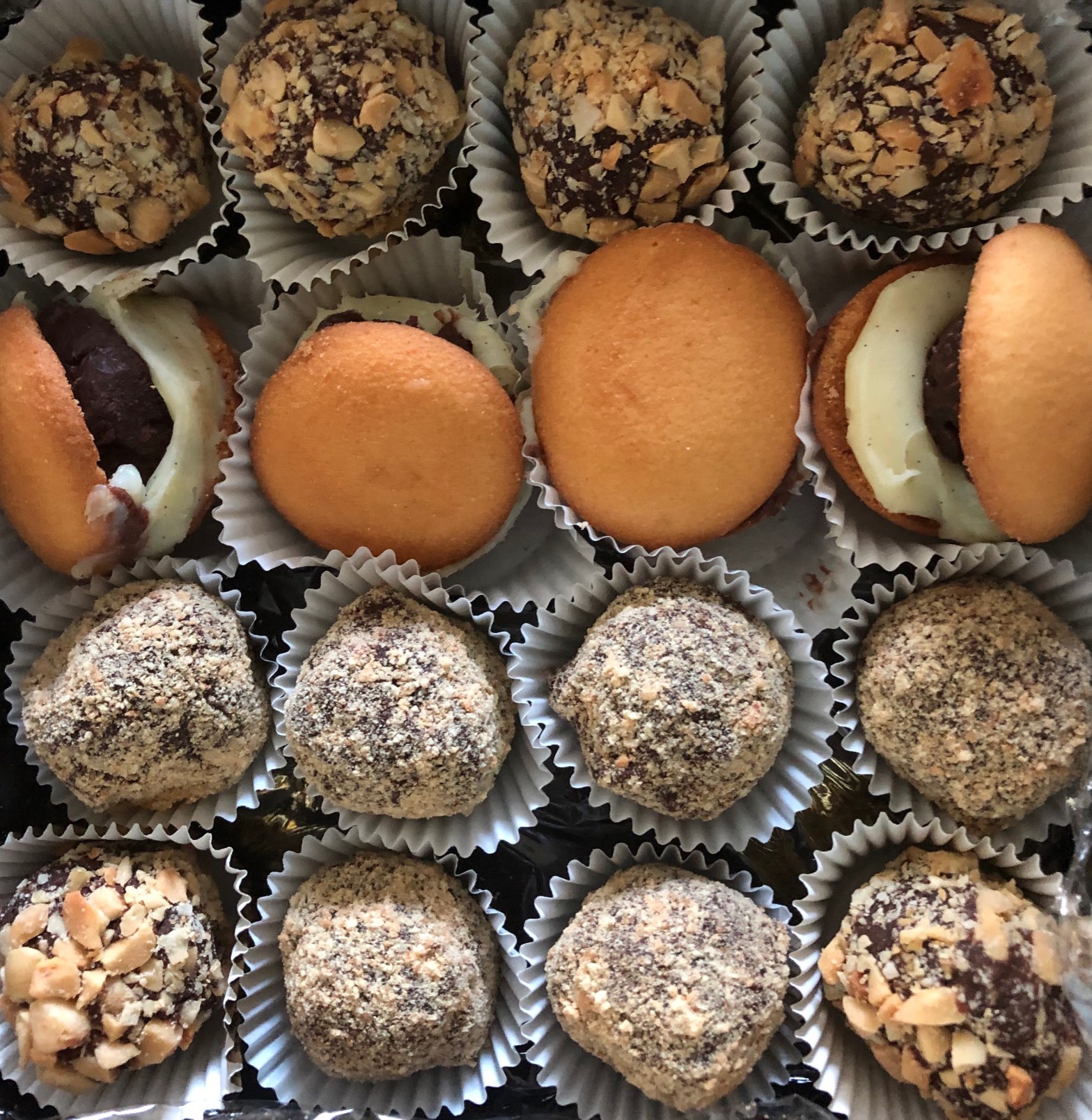


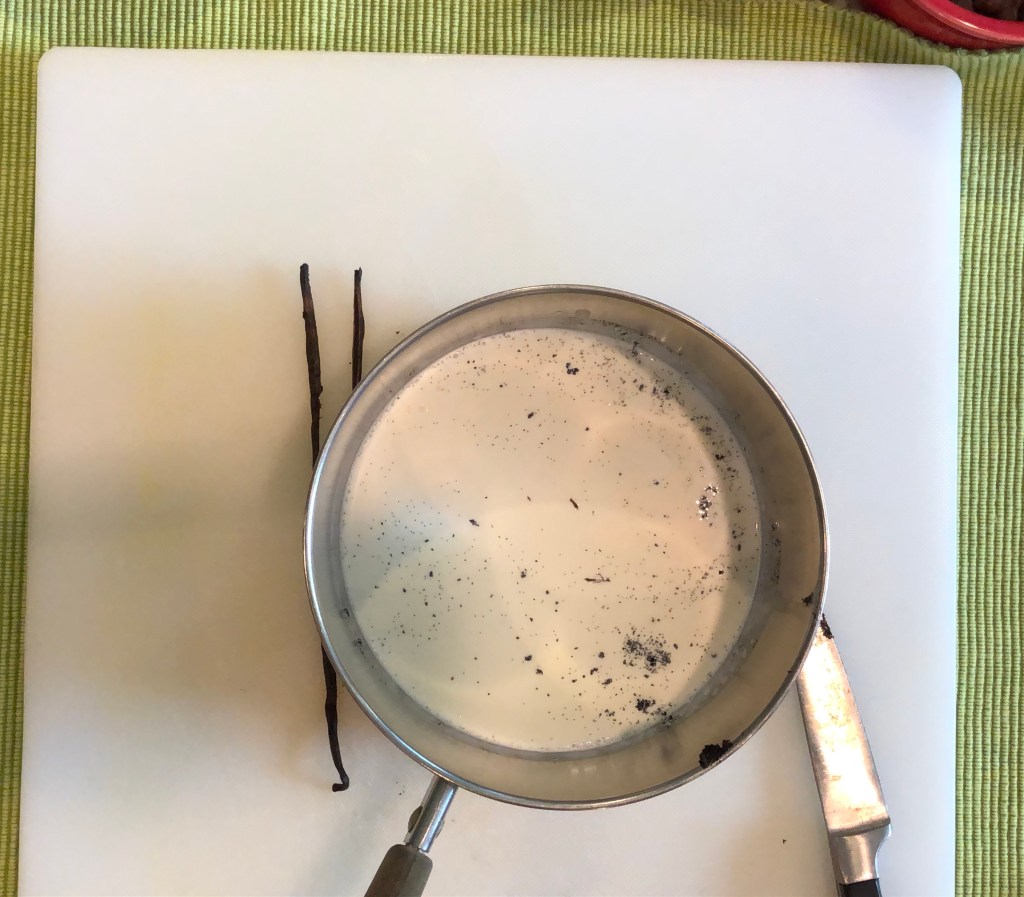
The soft ganache centers are simply mixtures of cream, butter, fine chocolate, and a flavoring. I’m making three flavors: triple chocolate vanilla bean, peanut butter, and cheesecake. These three flavors each use a different method of adding the flavoring. The vanilla flavor uses an opened vanilla bean heated in the cream and butter mixture (in lab, we would call this a flavor extraction). The peanut butter flavor simply uses peanut butter, and the cheesecake flavor uses a simple flavored syrup. You can also use flavoring extracts or oils with some slight modifications to the basic recipe.
The peanut butter and cheesecake ganaches are prepared in a semi-sweet chocolate. The triple chocolate vanilla bean contains three types of ganache: white chocolate, milk chocolate, and semi-sweet chocolate.
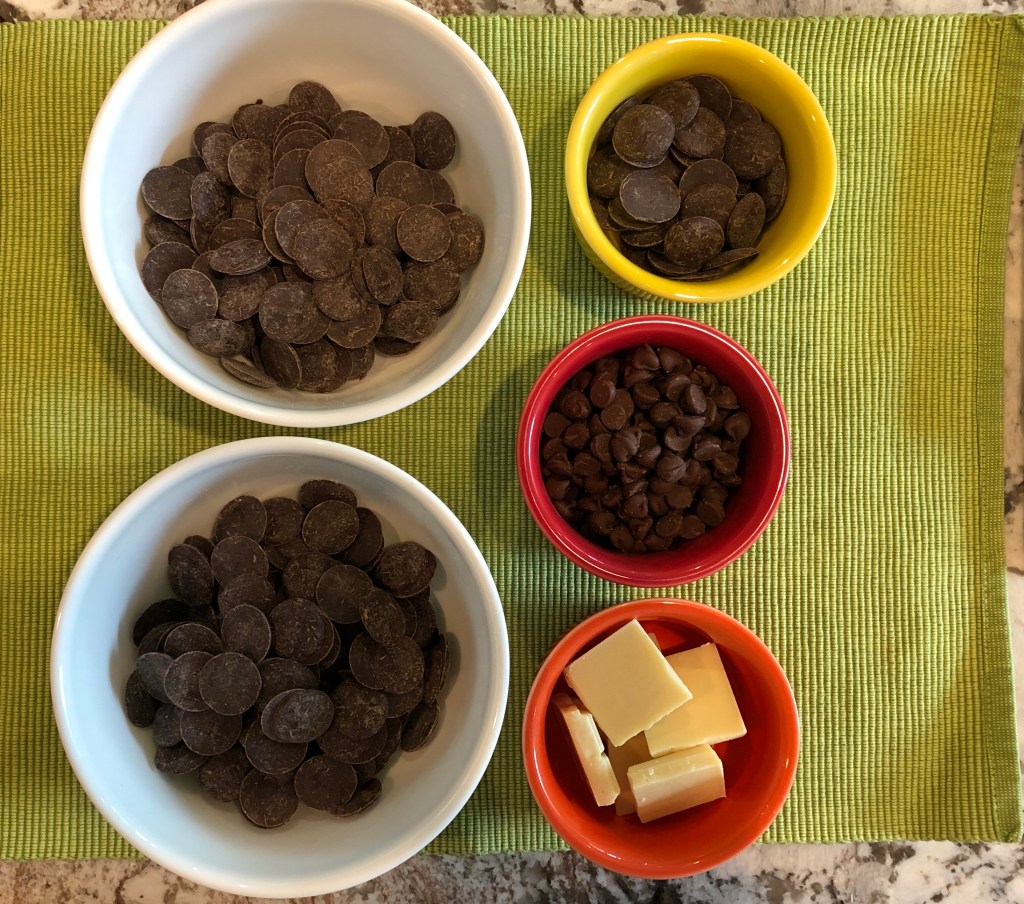
Because I am mixing the ganache chocolate with cream and butter, it doesn’t have to have a high percent of cocoa butter. It should be good quality chocolate but it doesn’t have to have an extra high content of cocoa butter.* The ganache mixtures will have low, broad melting points which makes them much softer than tempered solid chocolate.
*Lots of chocolate chemistry here that I am skipping over. The upshot is that enrobing chocolate DOES have to have an extra high content of cocoa butter in order to flow and fill the molds easily. Different types of chocolate will have different amounts of cocoa powder and cocoa butter, ranging from the white chocolate (35% cocoa butter and just enough cocoa powder to classify it as chocolate) to the bittersweet with a 72% cacao (total cacao of 72% = % cocoa powder + % cocoa butter). The more cocoa butter there is in a chocolate, the more easily it will flow when it is melted. Enrobing chocolate – that is, chocolate with a high percentage of cocoa butter – is often called couverature (covering) chocolate because of how it flows when it is melted. It is also usually more expensive because of its more specialized uses.
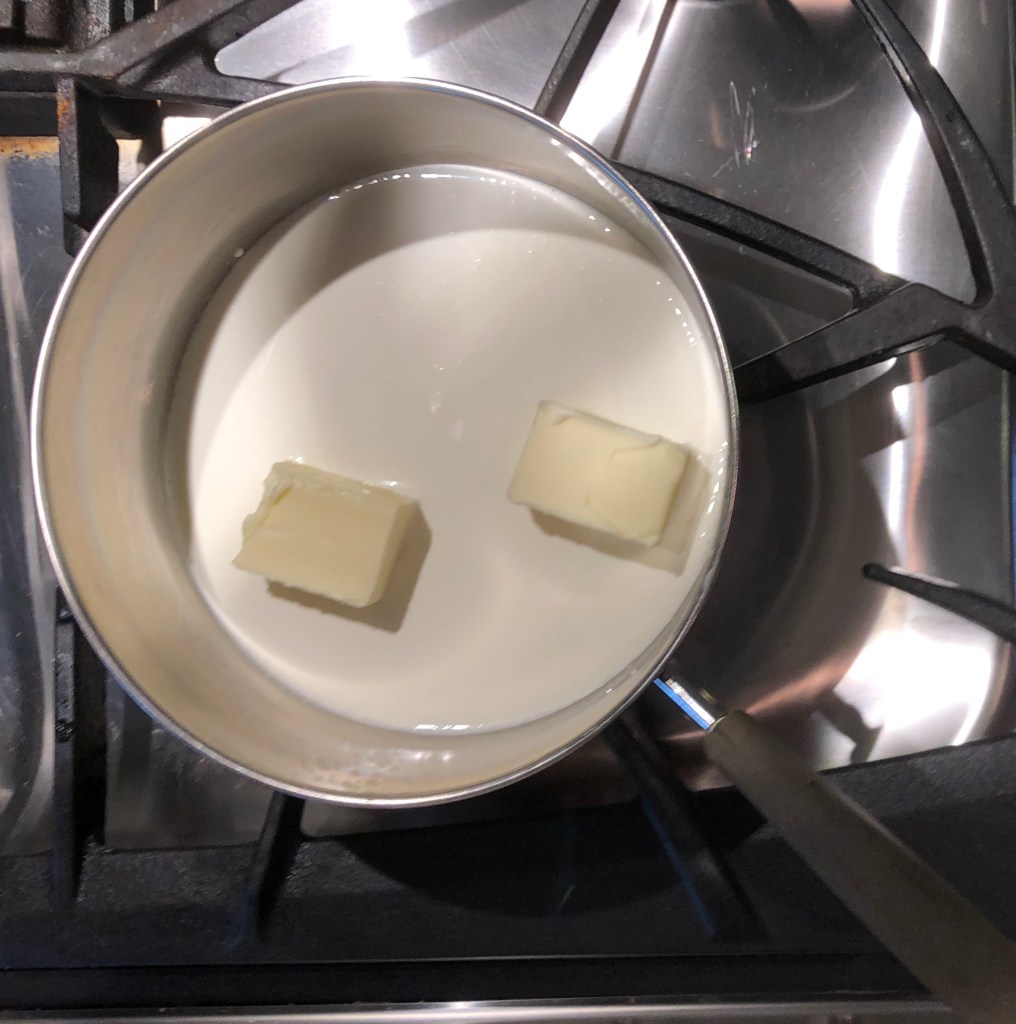
Once heated, the cream and butter mixture are added to the chocolate.
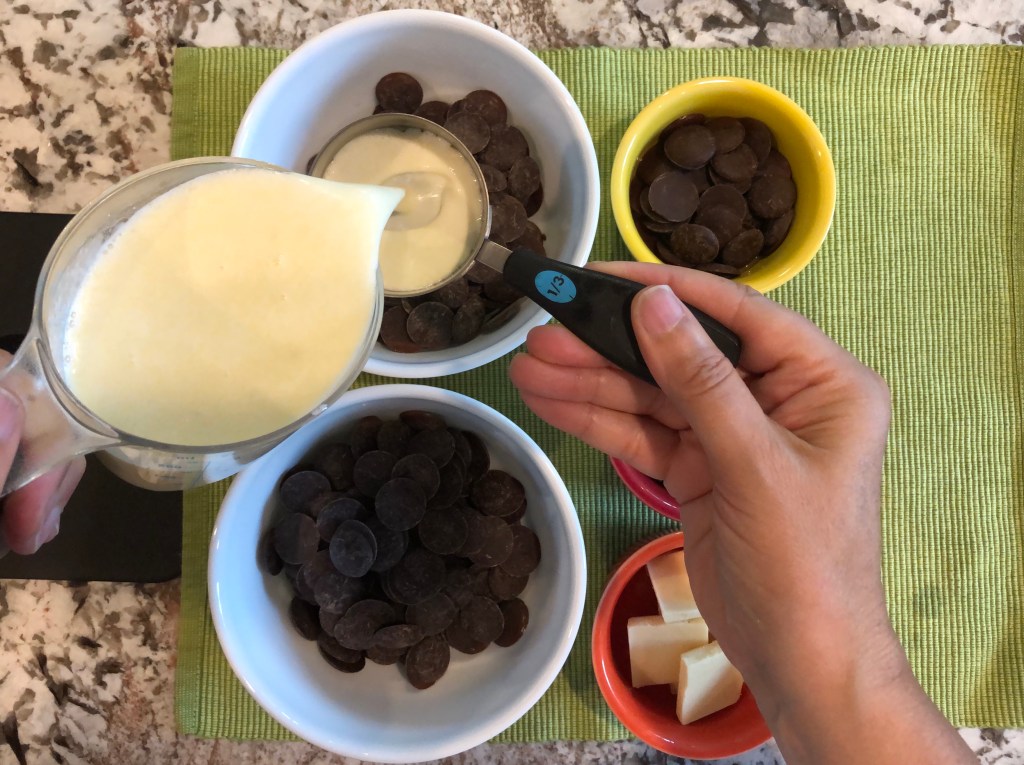
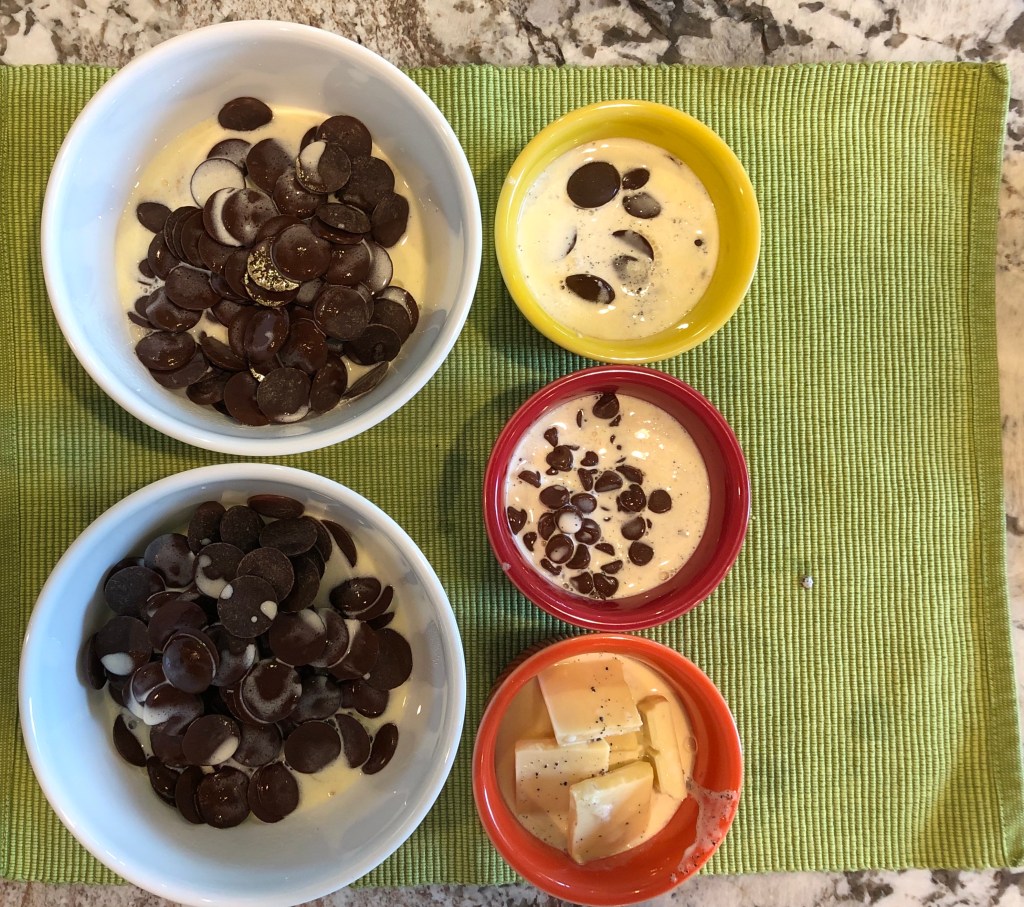
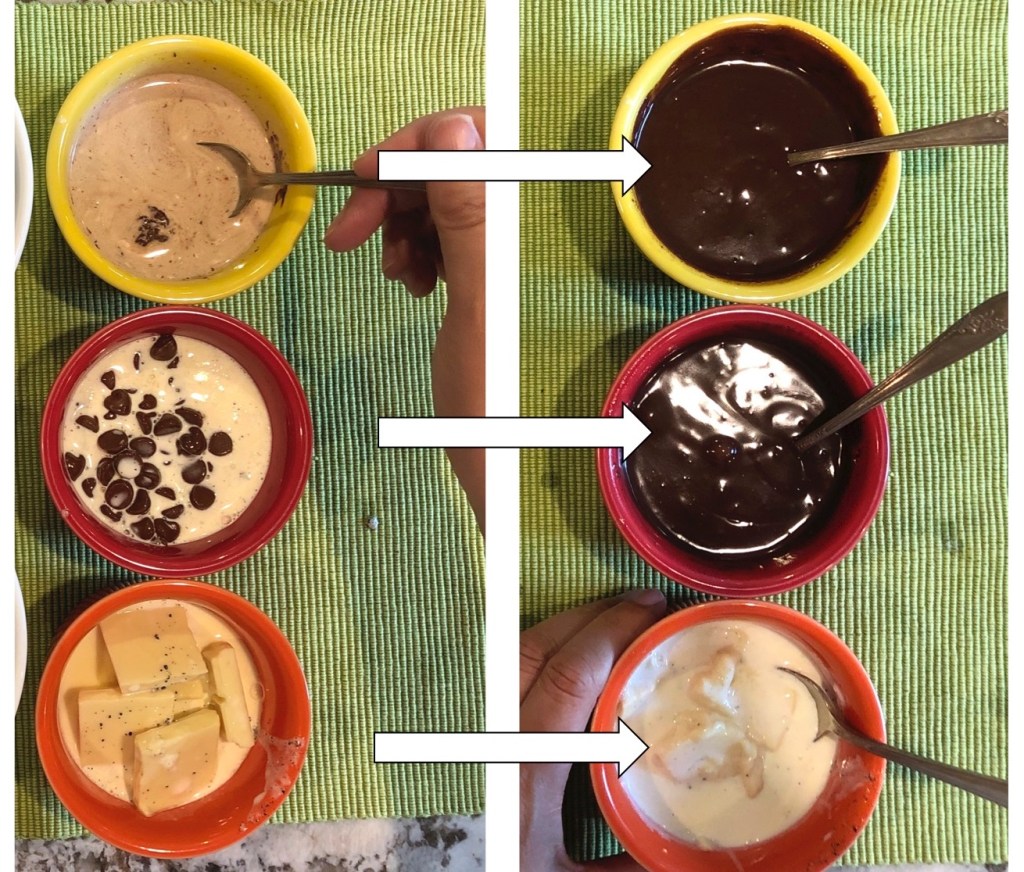
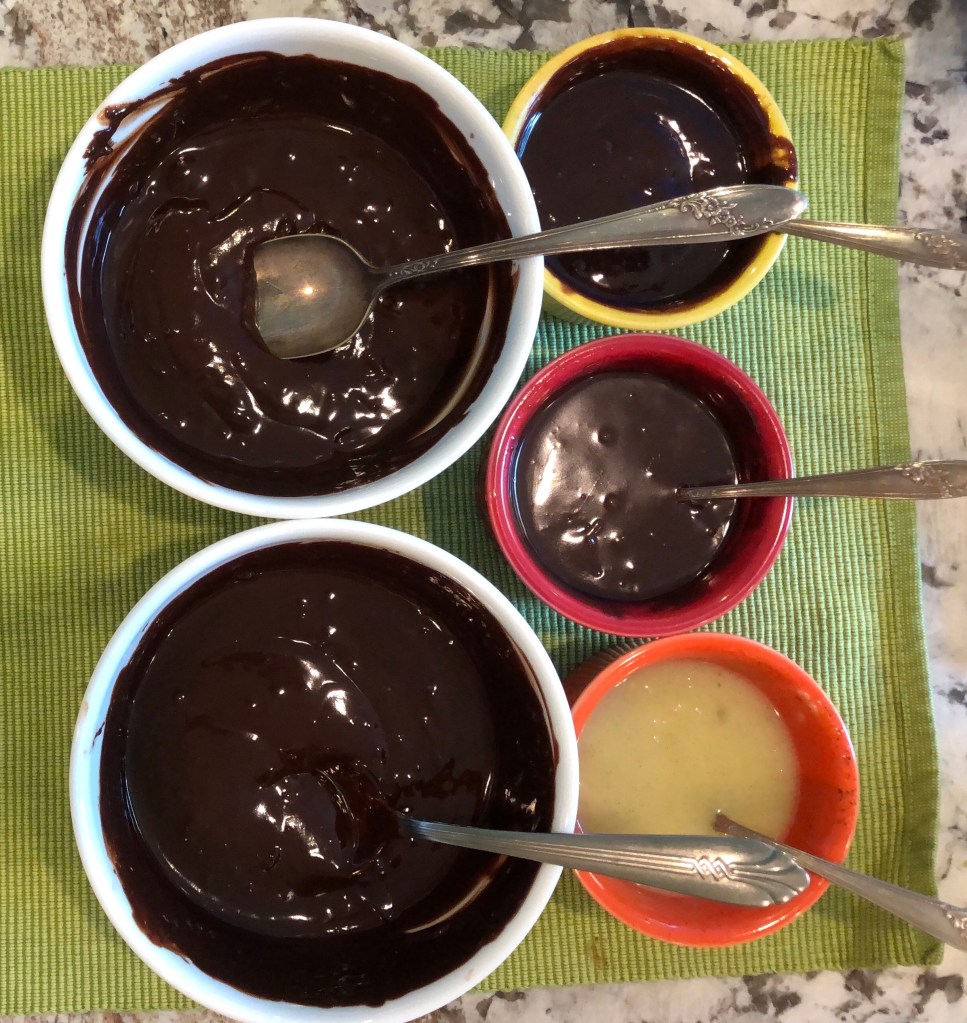
The Flavorings
The triple chocolate vanilla bean is flavored with a real vanilla bean that has been opened, scraped, and heated in the cream and butter. This additional heated cream and butter is added to the melted chocolate mixture.
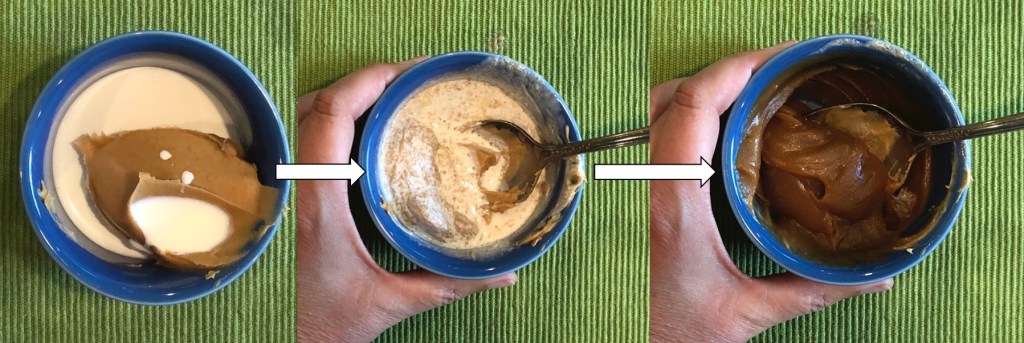
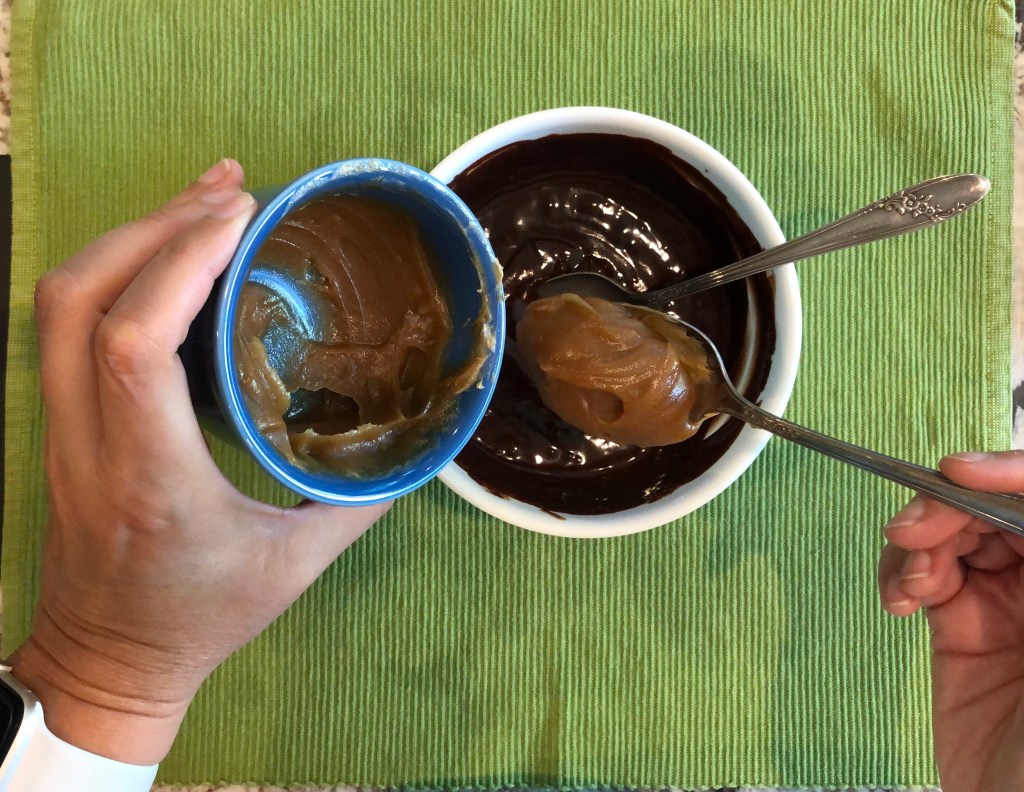
The peanut butter truffle is flavored with smooth peanut butter, mixed in with some extra cream.
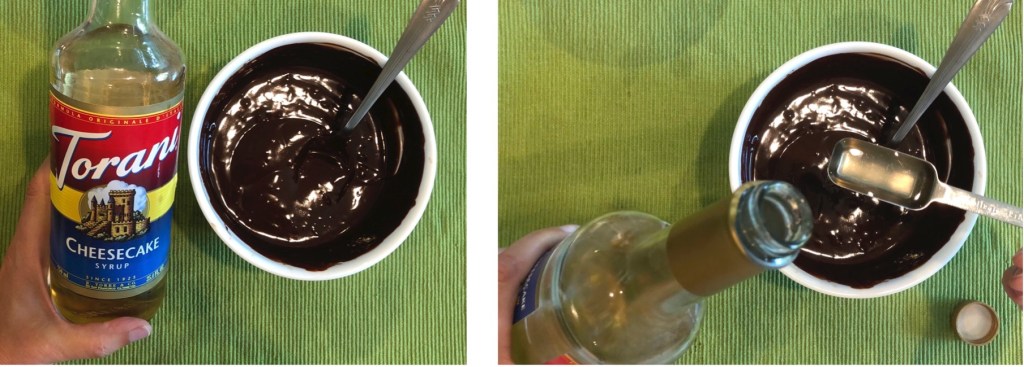
The cheesecake truffle is flavored with a cheesecake flavoring syrup. Alternatively, you could use a cheesecake-flavored oil with a slightly modified recipe. The cheesecake truffle is by far the sweetest of the three, since it uses a sweet syrup for flavoring in the semi-sweet chocolate ganache.
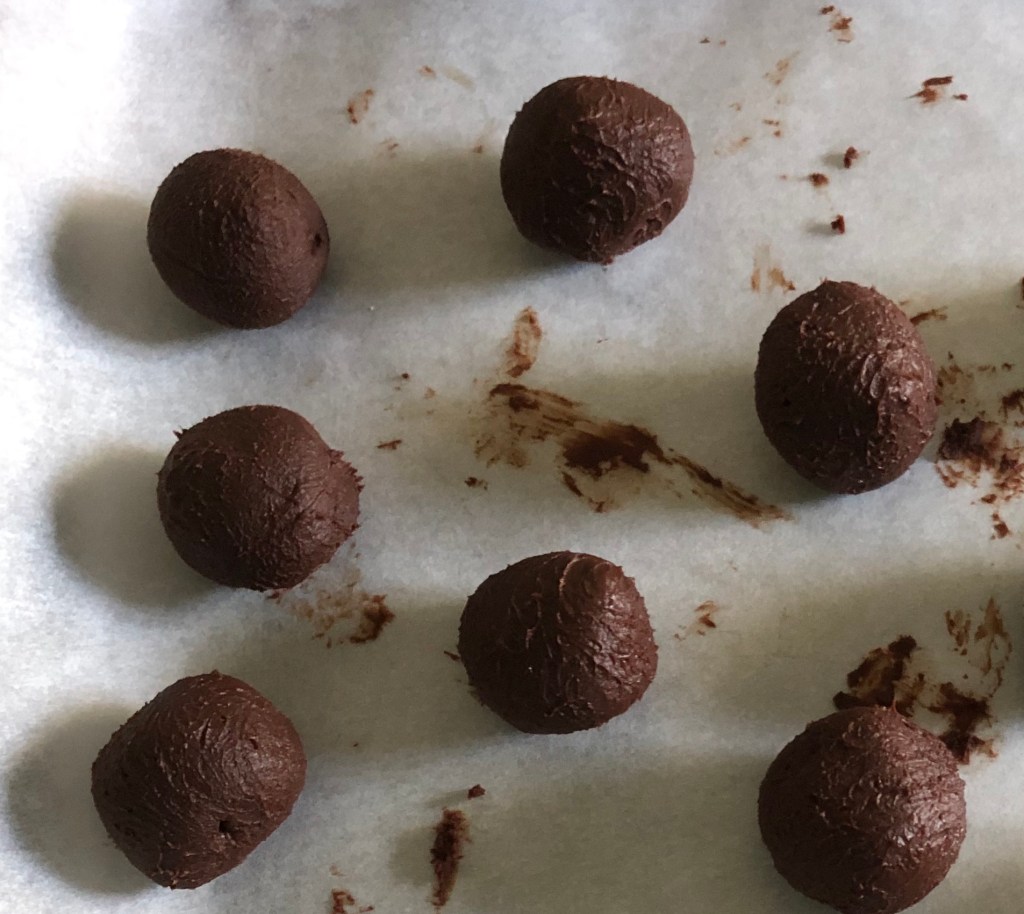
Let the centers cool to room temperature – they will begin to stiffen up. For hollow molding, I like the centers a bit less solidified, so I can use a piping bag to fill the shells. For un-enrobed truffles, as shown below, the centers should thicken up until they are the consistency of very thick frosting. I use a melon ball scoop, approximately a tablespoon, to scoop out the ganache. Then I quickly roll the ganache into spheres with gloved hands, and chill the spheres in the refrigerator for a few minutes to set up.
The hand-rolled truffles can be rolled in a coating (nuts, sprinkles, coconut, etc.) to keep them from melting on your fingers when eating. Remember, the centers have very low melting points, so they will immediately begin melting if you use your fingers to pick them up.
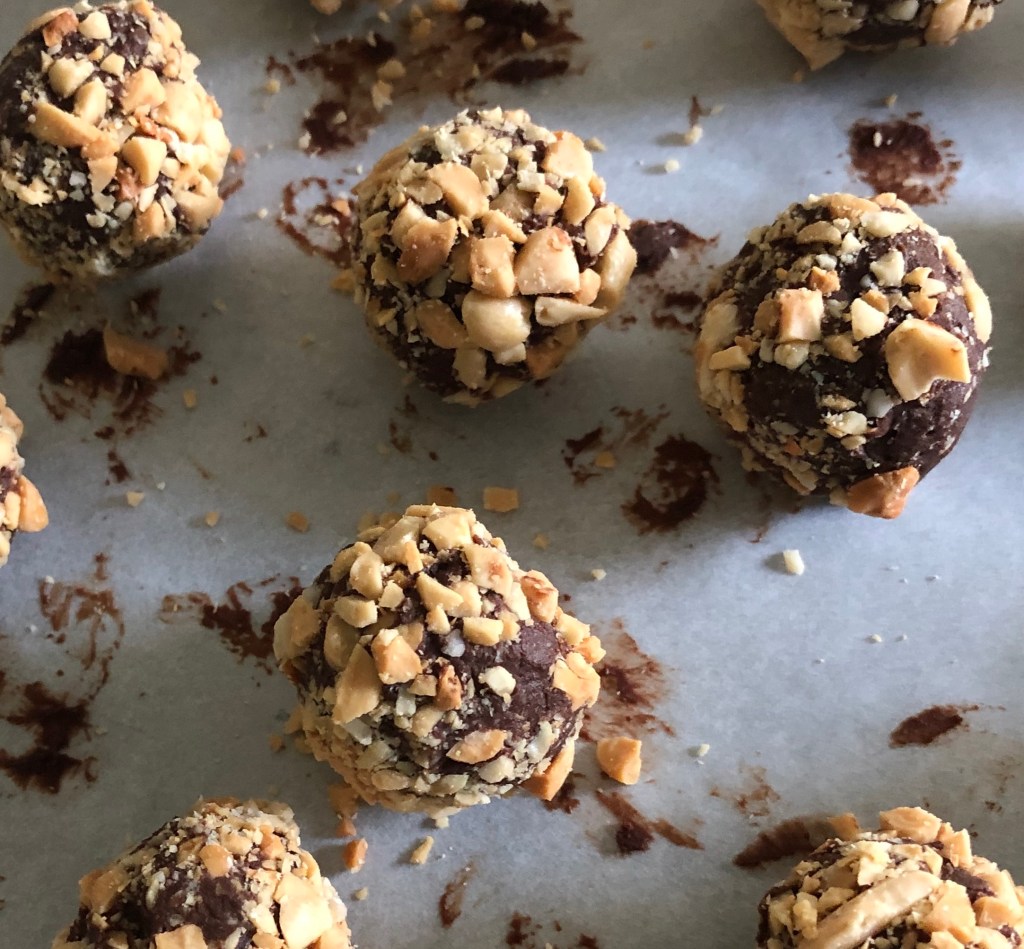
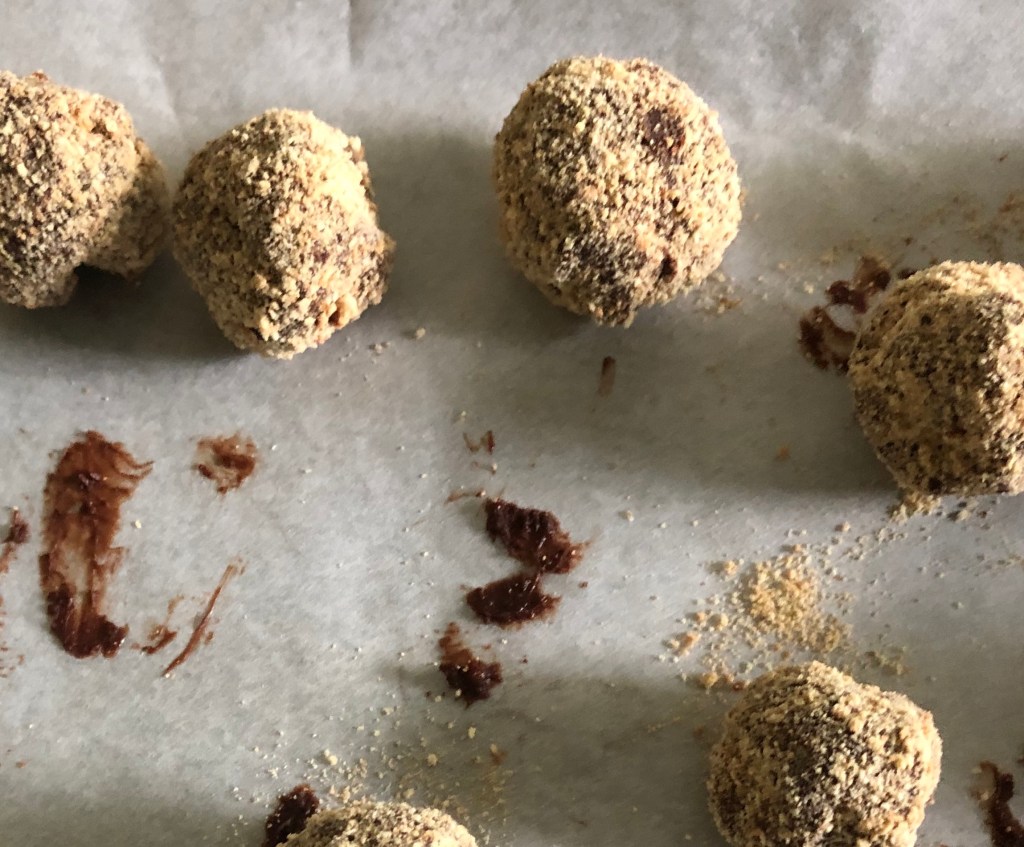
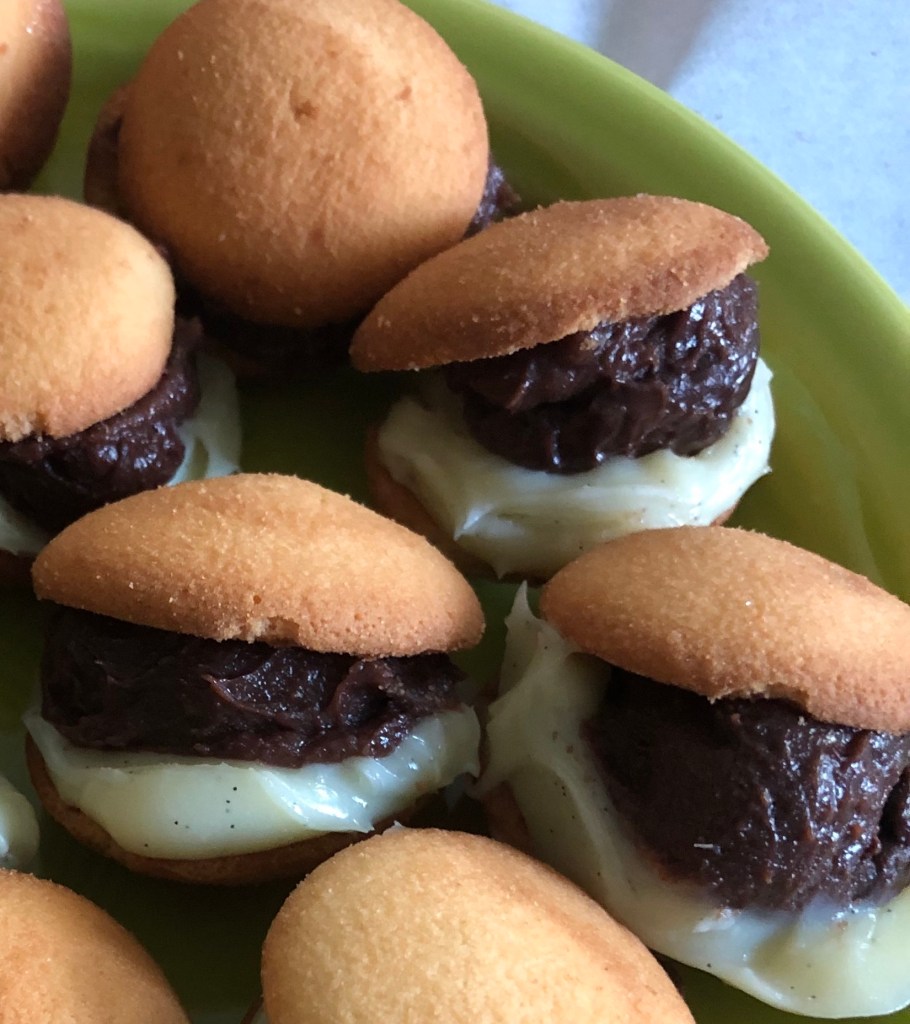
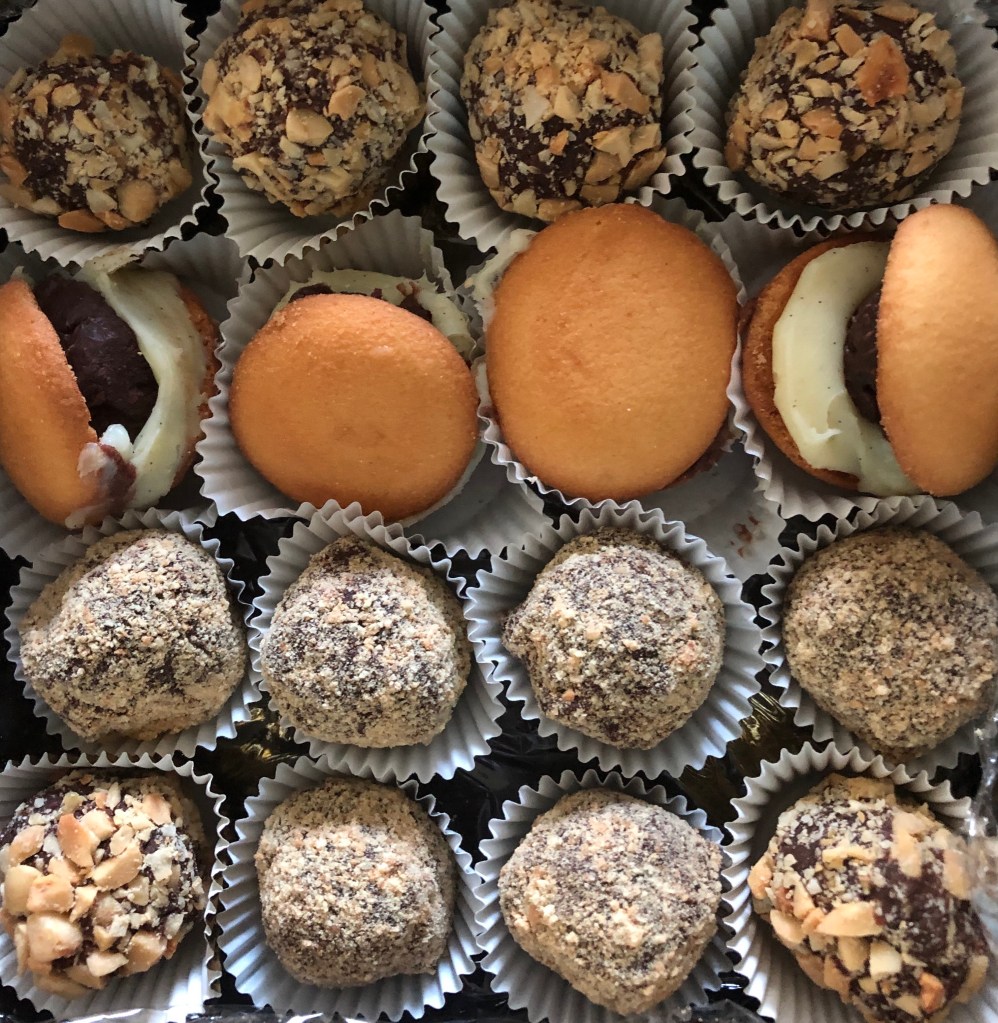
These type of truffles, that is, those that are not enrobed in solid chocolate, should be kept refrigerated. Remove them about an hour before eating so that they are soft and immediately melt in your mouth. IF you can wait an hour.
 Yarn and Chocolate
You are an extraordinary woman Mindy!! So glad I know you!!
LikeLike
Thank you! My taste buds TOLD me these are delicious chocolates. Now my mind KNOWS how & why! Love these chocolates AND the explanation with awesome photos.
LikeLike